
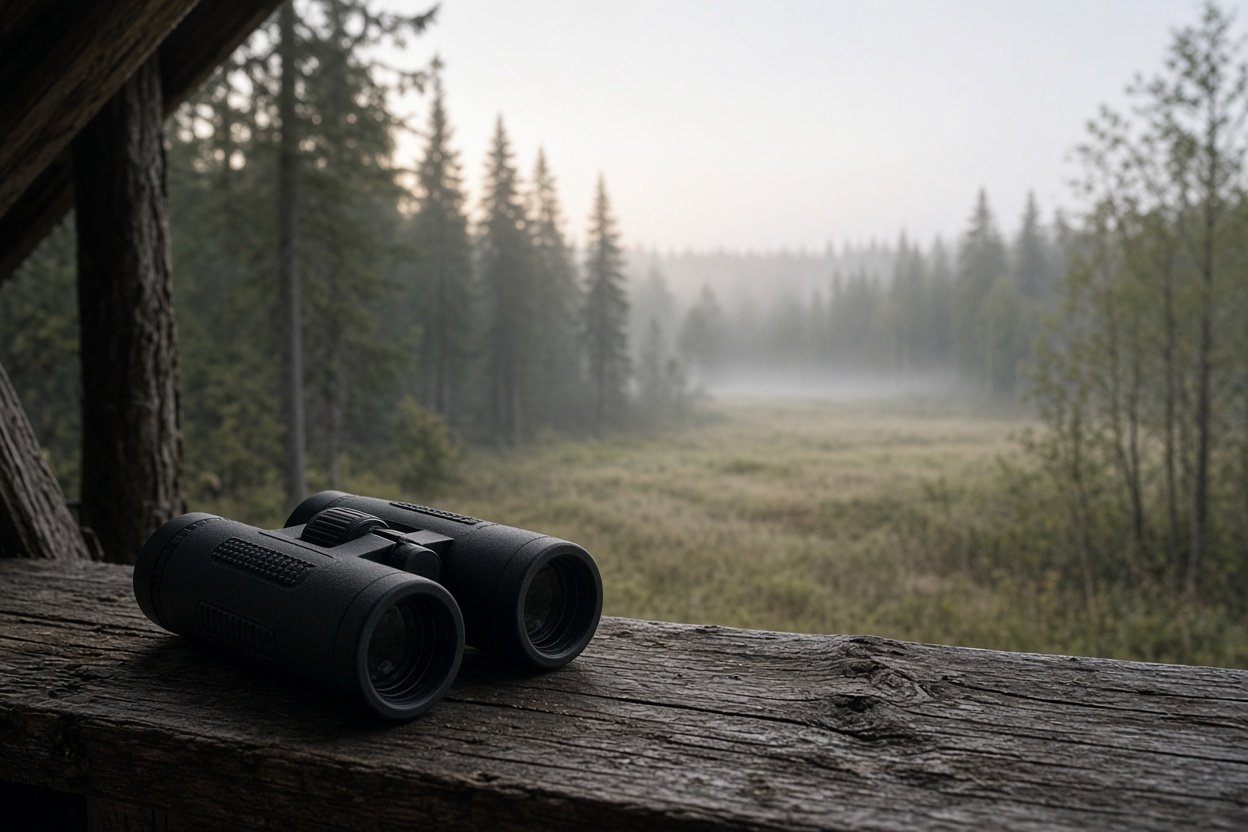
Binoculars for Spotting Game in Sweden: UK Buying Guide
Binoculars for hunting in Sweden: the short answer
For most hunters, 10×42 binoculars are the best starting point for spotting game in Sweden. They offer more magnification than 8×42 while remaining practical to carry and hold. Choose 8×42 for woodland, general wildlife viewing and easier hand-held observation; consider 10×50 when a brighter image in shaded woodland or around dawn and dusk matters more than size and weight. A 12×50 model is best reserved for situations where extra reach and a steady viewing position justify the additional bulk.
The first number describes magnification and the second is the objective-lens diameter in millimetres. Therefore, 10×42 binoculars magnify the view ten times and use 42 mm objective lenses. Larger objective lenses can provide a brighter image, but they generally make binoculars larger, heavier and more expensive.
That makes the choice less about finding the biggest number and more about matching the binoculars to your hunting position. A hunter moving between woodland and open ground will usually benefit from a manageable 8×42 or 10×42 pair. Someone watching across open country or wetlands may prefer 10x magnification, while a hunter observing from a hide can make better use of a heavier model.
Best binoculars for bird watching and Swedish wildlife
8×42 is the strongest all-round specification for general wildlife viewing. The combination gives a wide field of view, a bright image and easier hand-held use. That is useful when following moving animals, scanning woodland edges or switching quickly between nearby and distant areas.
The RSPB binocular buying guide describes 8x as particularly suitable for woodland and poorer light, while 10x is more appropriate for open country, wetlands and longer-distance viewing. The same principle applies when binoculars are used for bird watching during a hunting trip: select the field of view and steadiness you can use repeatedly, rather than simply choosing the highest magnification.
For a mixed trip involving hunting, bird watching and wildlife observation, an 8×42 pair is a safe general-purpose choice. If open views are likely to dominate and you are comfortable holding the binoculars steadily, 10×42 gives extra detail at distance. Both formats are more versatile for hand-held use than a very high-magnification design.
8×42, 10×42, 10×50 or 12×50?
Choose 8×42 for steadiness and a broad view, 10×42 for the most balanced hunting performance, 10×50 for more light, and 12×50 for maximum reach from a stable position. The table summarises the practical differences.
| Specification | Best suited to | Main advantage | Main compromise |
|---|---|---|---|
| 8×42 | Woodland, general wildlife and hand-held viewing | Wide field of view, bright image and easier use | Less magnification for distant subjects |
| 10×42 | Open ground, mixed hunting and longer-distance viewing | More magnification while remaining relatively manageable | Harder to hold steady than 8×42 and potentially less bright in poor light |
| 10×50 | Shaded woodland, dawn and dusk | Larger objectives gather more light | More size and weight than 10×42 |
| 12×50 | Long-distance observation from a hide or supported position | Extra magnification and large objectives | Heavier and more demanding to hold steadily |
The difference between 10×42 and 12×50 is especially important. Nikon lists its ACTION 10×42 at 790 g and its ACTION 12×50 at 945 g. The 12×50 has more magnification and a larger objective lens, but the additional weight makes prolonged hand-held viewing more demanding. For a general hand-held hunting recommendation, 10×42 is therefore the more practical of the two.
What to look for in binoculars for hunting
Prioritise weather protection, optical comfort, manageable weight and an appropriate field of view. These features affect how useful the binoculars remain during a long outdoor day.
- Waterproofing and nitrogen or argon filling: these features help prevent moisture, condensation, fogging, dirt and dust from entering the binoculars. The RSPB explanation of binocular specifications identifies waterproofing and nitrogen filling as useful for outdoor use.
- Eye relief: eye relief is the distance between the eyepiece and the position where the full image can be seen. If you wear glasses, look for at least 16 mm of eye relief.
- Field of view: this tells you how much ground is visible at a stated distance. A wider view helps when locating an animal or following movement, although magnification and optical design also affect the overall experience.
- Weight: heavier binoculars may offer larger objectives or more features, but they are more tiring to carry and hold. Compare the weight with the way you actually hunt.
- Close-focus distance: this matters more for bird watching and nearby wildlife than for distant game, but it can make one pair more versatile on a mixed trip.
Keep the binoculars separate from the role of the rifle and any rangefinding equipment. They are for locating, observing and assessing the scene. If you need an integrated distance measurement, a rangefinder binocular is a different product category and should be chosen for that specific function.
Best budget binoculars for bird watching and hunting
A useful budget is between £50 and £150 for starter binoculars, with £150–£350 covering the mid-level range. Advanced binoculars sit above £350. These are the general UK price bands given by the RSPB, and they provide a more useful starting point than assuming the most expensive model is automatically the right one.
For a low-cost 10×50 option, Currys listed the PRAKTICA Falcon 10×50 at £39.99 on 9 September 2026. It has Porro prisms, a 5.7-degree field of view, a 5 mm exit pupil, a weight of 770 g and a 25-year guarantee. The relatively low price is attractive, but the weight is worth considering if the binoculars will be carried all day.
At the other end of the starter range, the RSPB Shop listed Skylark 8×42 binoculars at £100 on the same date. Their specification makes the format suitable for general viewing, where a wide field and easier hand-held use matter more than maximum reach.
Decathlon listed SOLOGNAC Waterproof Hunting Binoculars 500 10×50 at £129.99. The model is nitrogen-filled, waterproof to 1 m for 15 minutes, uses BaK4 prisms and fully multi-coated lenses, and is specified with 77% light transmission. Those features make it a particularly relevant option for a hunter who wants 10×50 objectives and outdoor protection without moving into the higher price bands.
Prices and stock change, so use the product pages to confirm the current position before buying. The figures above were listed on 9 September 2026.
Mid-range and premium binoculars in the UK
Mid-range binoculars are worth considering when waterproofing, warranty cover, optical control and long-term comfort matter more than the lowest purchase price. The RSPB Harrier 10×42 is one clearly specified example: the RSPB Shop listed it at £250, with waterproofing, fog-proofing, a 10-year warranty, a 2 m close-focus distance and a 114 m field of view at 1,000 m. It weighs 674 g and has a 4.2 mm exit pupil.
That combination suits a hunter who wants 10x magnification but does not want an especially heavy pair. It also works for bird watching and wildlife viewing between outings. The Harrier’s close-focus specification is more relevant to nearby observation than to distant game, but it adds versatility.
Nikon’s UK prices for the ACTION range on 9 September 2026 were £119 for ACTION 8×42, £129 for ACTION 10×42, £129 for ACTION 10×50 and £139 for ACTION 12×50, including VAT. ACTION 8×42 has a 140 m field of view at 1,000 m, a 5.3 mm exit pupil and a weight of 790 g. These figures show why the specification should be read as a complete package: magnification, field of view, exit pupil and weight all influence usability.
For a premium build, Nikon MONARCH HG binoculars use ED glass, a magnesium-alloy body and nitrogen filling. Nikon states that they are waterproof to 5 m for up to 10 minutes. Nikon MONARCH M7 42 mm models weigh 680 g or less and can be mounted on a tripod, which Nikon identifies as useful for extended viewing from a hide. Those features are most relevant when the binoculars will be used frequently or for long observation sessions.
Binoculars Argos, Currys and Decathlon: what the prices show
UK retailers cover a very wide price range, so compare the specification rather than the shop name. Argos listed Celestron Trailseeker 10×42 binoculars at £269.99 and Canon 10x42L IS WP binoculars at £1,699.99 on 9 September 2026. Argos also describes 10×42 as a useful starting point for many birdwatchers and advises considering magnification, lens size, weight and comfort.
| Retailer or shop | Model | Format | Listed UK price | Useful detail |
|---|---|---|---|---|
| Currys | PRAKTICA Falcon | 10×50 | £39.99 | 770 g, 5 mm exit pupil, 25-year guarantee |
| RSPB Shop | Skylark | 8×42 | £100 | General-purpose 8×42 format |
| Nikon UK | ACTION | 10×42 | £129 | 790 g |
| Decathlon | SOLOGNAC Waterproof Hunting Binoculars 500 | 10×50 | £129.99 | Nitrogen-filled, waterproof and fully multi-coated |
| RSPB Shop | Harrier | 10×42 | £250 | Waterproof, fog-proof and 10-year warranty |
| Argos | Celestron Trailseeker | 10×42 | £269.99 | 10×42 format for wildlife viewing |
The table is a snapshot of listed UK prices on 9 September 2026. It is not a ranking: the right choice depends on whether you value low weight, larger objectives, weather protection, warranty cover or a wide field of view.
Should you choose rangefinder binoculars?
Choose ordinary binoculars if your main task is finding and observing game; choose rangefinder binoculars only when integrated distance measurement is a requirement. A rangefinder binocular combines viewing with a distance-reading function, which can change the price, weight and controls compared with a conventional pair.
Decathlon listed SOLOGNAC 10×42 LRF 1000M hunting rangefinder binoculars at £339.99 on 9 September 2026. This makes them a distinct purchase from the SOLOGNAC 10×42 or 10×50 optical models. Decide first whether you need a rangefinder at all, then compare the optical specification and carrying weight with a standard pair.
How to choose binoculars for a hunting trip in Sweden
Match the binoculars to the dominant viewing situation before you travel. Use this simple process:
- Start with the terrain and distance: choose 8×42 for woodland and general use, or 10×42 when open ground and longer-distance viewing are more important.
- Decide how much low-light performance you need: 10×50 has larger objective lenses than 10×42 and can provide a brighter image, but expect more size and weight.
- Check your hand-held steadiness: higher magnification is harder to hold steady. If you will scan for long periods, a lighter or lower-powered model may be easier to use.
- Check your clothing and eyewear: if you wear glasses, look for at least 16 mm of eye relief. Make sure the controls can be used comfortably with the clothing and gloves you expect to wear.
- Confirm protection: waterproofing and nitrogen or argon filling are valuable for outdoor use because they help protect against moisture, condensation, fogging, dirt and dust.
- Consider the support available: 12×50 becomes more sensible from a hide or another steady viewing position. For walking and general hand-held use, 10×42 is easier to justify.
International hunters should also check the administrative requirements for the trip. Naturvårdsverket states that foreign hunters must pay the Swedish hunting permit fee, currently SEK 400, and that visitors do not need to pass the Swedish hunting examination in order to hunt. Binocular selection does not replace checking the current arrangements for the hunt, land and organiser.
Frequently asked questions
What are the best binoculars to have?
For most people, 8×42 is the best all-round binocular specification because it combines a wide field of view, brightness and easier hand-held use. For hunting over open ground, 10×42 can be the better choice because it provides more magnification while remaining more practical than a heavier 12×50. The best pair is the one whose weight, field of view and weather protection suit the way you will use it.
What binoculars does Chris Packham recommend?
There is no verified, current first-hand source in this guide in which Chris Packham gives a general model recommendation. Older BirdForum posts identify him with Canon 10x42L IS WP binoculars during parts of Winterwatch, but that is user discussion rather than a current recommendation from Packham. It should not be treated as an endorsement.
What is better, 12×50 or 10×42 binoculars?
10×42 is generally better for hand-held hunting because it is lighter and less demanding to keep steady. A 12×50 can provide more magnification and its larger objectives can gather more light, but it is larger and heavier. Nikon lists ACTION 10×42 at 790 g and ACTION 12×50 at 945 g. Choose 12×50 when extra reach and a steady viewing position are more important than easy carrying.
How much should I pay for a good pair of binoculars?
Use £50–£150 as a starter range, £150–£350 for mid-level binoculars and more than £350 for advanced models. Examples listed on 9 September 2026 include Nikon ACTION 10×42 at £129, the RSPB Harrier 10×42 at £250 and Decathlon SOLOGNAC Waterproof Hunting Binoculars 500 10×50 at £129.99. Pay for the features you need—particularly protection, comfort, weight and optical quality—rather than magnification alone.